
Sustainability
The socio‑economic and environmental context has made the transition towards sustainable business models no longer postponable.
Learn more
Events
As global sustainability regulations continue to evolve, carbon pricing is becoming an increasingly important consideration for businesses engaged in international trade. For Vietnamese exporters, particularly those operating in carbon-intensive industries, the ability to measure, manage, and disclose environmental performance is rapidly shifting from a voluntary initiative to a business necessity.
Against this backdrop, CRIF Vietnam participated in TÜV SÜD Vietnam's seminar, "The Future of Secure & Sustainable Digital Business", held on 17 April 2026 in Ho Chi Minh City. The event brought together experts in cybersecurity, artificial intelligence, and sustainability to discuss emerging challenges and opportunities shaping the future of business.
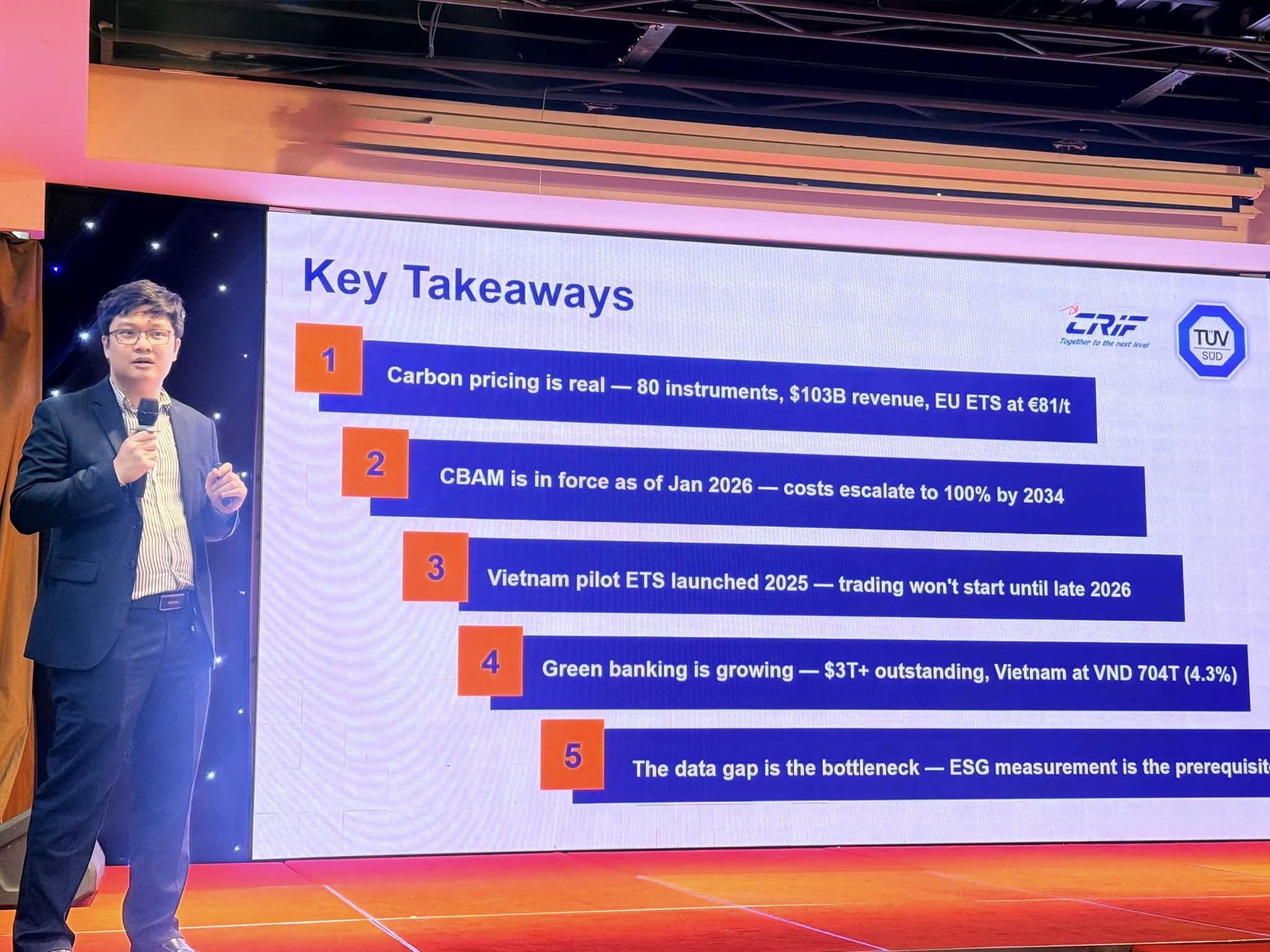
Representing CRIF Vietnam, Mr. Tung Anh Nguyen, Head of ESG and Compliance, joined the panel discussion to share insights on the evolving carbon pricing landscape and the growing role of ESG data in supporting sustainable finance.
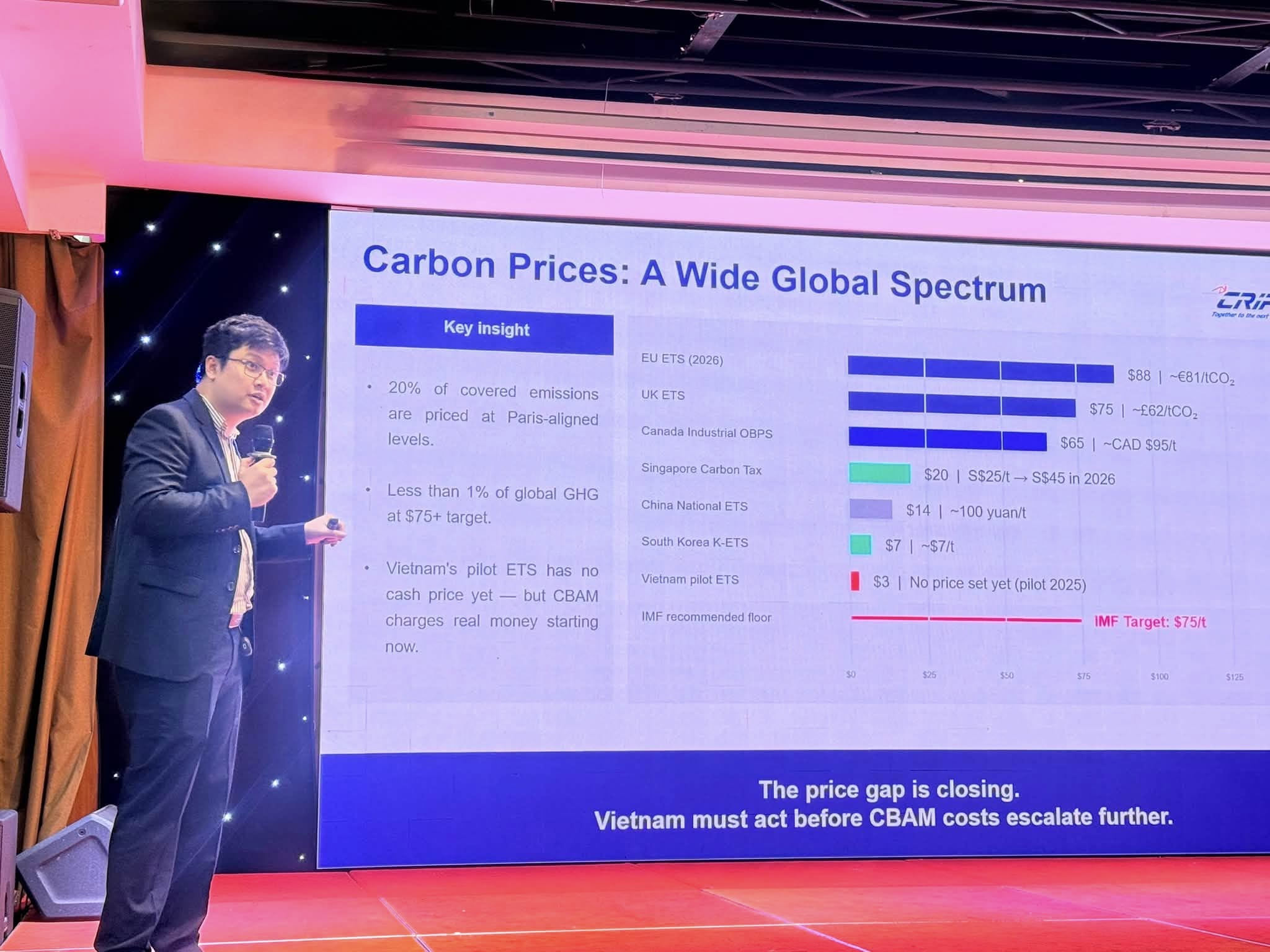
During the discussion, speakers highlighted the impact of the European Union's carbon pricing mechanisms. The EU Emissions Trading System (EU ETS) is currently trading at approximately €75 per tonne of CO₂, while the Carbon Border Adjustment Mechanism (CBAM), which entered into force on 1 January 2026, introduced its first certificate price at €75.36 per tonne of CO₂. These developments have significant implications for exporters in sectors such as steel and aluminium, with carbon-related costs expected to increase progressively until full implementation in 2034.
A key theme of the discussion was the growing importance of reliable ESG data in enabling green finance and supporting credit assessment. While sustainable finance continues to gain momentum, one of the main challenges remains the availability of standardized, transparent, and verifiable ESG information at the enterprise level.
This challenge is particularly relevant in Vietnam, where green credit currently accounts for approximately 4.3% of total outstanding loans, compared with the State Bank of Vietnam's target of 25% by 2030. Bridging this gap will require stronger ESG measurement frameworks, greater transparency, and wider adoption of sustainability reporting practices.
At CRIF Vietnam, we believe that reliable data is a fundamental building block of sustainable finance. Through solutions such as Synesgy, businesses can assess, monitor, and share ESG performance in line with internationally recognized standards, helping improve transparency and support access to green financing opportunities.
We thank TÜV SÜD Vietnam for creating a valuable platform for dialogue and knowledge sharing, and we look forward to continuing to contribute to the development of a more transparent, resilient, and sustainable business ecosystem in Vietnam.

Events
Events
Events
Events
Events
Events


